CO₂ Laser Surgery for Oral Leukoplakia and Erythroplakia:
- Dental Solution USA
- Dec 21, 2025
- 3 min read
Updated: Feb 3
Hello everyone, this is Raymond Lee from Raymond’s Dental Solutions.
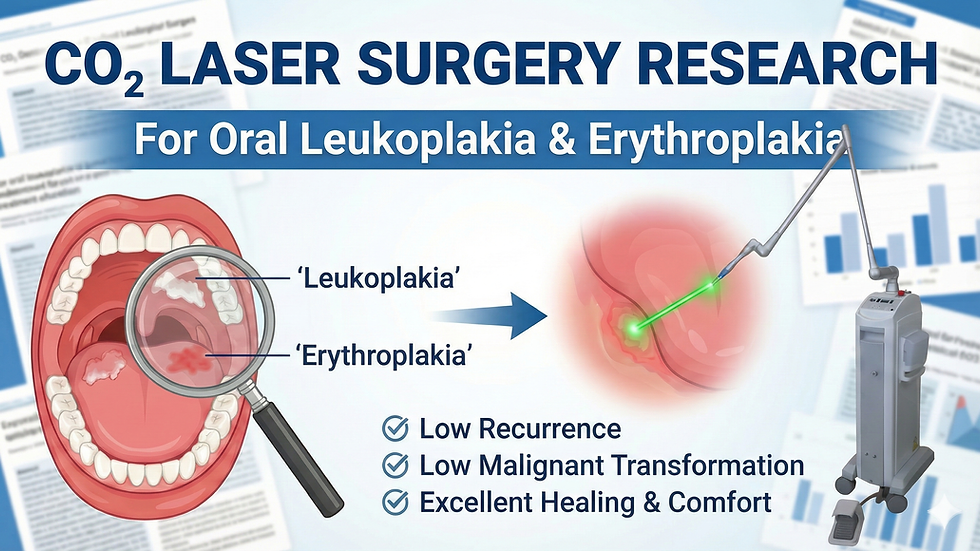
Today, I’d like to walk you through a high-impact 2024 systematic review and meta-analysis that every clinician using—or considering—CO₂ lasers should know: “CO₂ Laser Surgery for Oral Leukoplakia and Erythroplakia,” published by Almeida et al.
Why This Topic Matters
Oral leukoplakia and erythroplakia are among the most clinically significant oral potentially malignant disorders (OPMDs). Both carry a real risk of progression to oral squamous cell carcinoma, making treatment choice and long-term management critically important. Because of its precision, hemostasis, and affinity for soft tissue, the CO₂ laser has become an increasingly preferred surgical modality. This review evaluates whether the clinical data truly support that trend.
Purpose of the Review
The authors aimed to assess how effective and safe CO₂ laser excision or ablation is for managing oral leukoplakia and erythroplakia, focusing on:
Recurrence rates
Malignant transformation
Healing outcomes
Postoperative complications
Quality of tissue specimens for histopathology
Study Design & Methodology
The authors conducted a comprehensive literature search, including:
Prospective clinical studies
Retrospective cohort studies
Clinical case series
All included studies involved CO₂ laser treatment of leukoplakia or erythroplakia. When possible, meta-analytic techniques were applied to strengthen the conclusions across studies.
Key Findings
1. Recurrence and Treatment Success
Across the literature, CO₂ laser surgery demonstrated low to moderate recurrence rates. In studies that allowed direct comparison, CO₂ laser treatment generally showed equal or better outcomes than conventional scalpel excision. Recurrence was most strongly associated with:
High-grade epithelial dysplasia
Larger lesion size
Patient risk factors such as tobacco use
2. Malignant Transformation
The meta-analysis showed low malignant transformation rates following CO₂ laser treatment. Evidence suggests that complete laser excision with clear margins may reduce progression to oral cancer, particularly in dysplastic lesions.
3. Healing and Patient Comfort
Consistent benefits were reported across multiple studies:
Minimal intraoperative bleeding
Reduced postoperative pain
Faster re-epithelialization
Less scarring
Improved functional outcomes
These results are attributed to the precise photothermal interaction of the CO₂ laser with water-rich soft tissue.
4. Safety and Complications
Complications were rare and generally mild, with no significant long-term morbidity reported. Importantly, histopathological evaluation of excised tissue remained reliable, with minimal thermal artifacts—addressing a common concern regarding laser surgery.
Strengths and Limitations
While overall outcomes strongly support CO₂ laser use, the authors note limitations in the existing literature, including:
Variability in laser parameters
Differences in surgical protocols
Inconsistent follow-up periods
Variable study quality
As a result, they emphasize the need for more standardized, randomized clinical trials in the future.
Conclusion
This systematic review and meta-analysis supports CO₂ laser surgery as a safe, effective, and minimally invasive treatment option for oral leukoplakia and erythroplakia. Key advantages include:
Low recurrence rates
Low malignant transformation rates
Excellent healing and patient comfort
However, long-term follow-up remains essential, given the inherent malignant potential of these lesions.
Clinical Takeaway
From a practical standpoint, this review reinforces the CO₂ laser as a preferred modality for early intervention in potentially malignant oral lesions. It offers:
Superior patient comfort
Predictable healing
A valuable role in reducing cancer risk
For clinicians focused on modern, minimally invasive, and patient-centered care, the evidence continues to move clearly in favor of CO₂ laser surgery.
The Future of Dental Technology
As we look ahead, the integration of advanced technologies into dental practices is crucial. The evolution of tools like the CO₂ laser signifies a shift towards more patient-friendly treatments. By embracing these innovations, we can enhance patient experiences and outcomes.
Empowering Dental Practices
At Dental Solution USA, we aim to empower dental practices across North America. We provide exclusive access to advanced dental technology and comprehensive support. This helps dentists offer modern, patient-friendly treatments and grow their practices through effective digital marketing.
The Importance of Continuous Learning
Continuous education is vital in our field. Staying updated with the latest research, like the findings from Almeida et al., allows us to make informed decisions. By sharing knowledge and experiences, we can collectively improve our practices and patient care.
Building a Community of Support
We believe in the power of community. By connecting with fellow professionals, we can share insights and strategies. This collaboration fosters growth and innovation in our practices. Together, we can navigate the challenges of modern dentistry and enhance our patients' health and well-being.
In conclusion, as we adopt new technologies and methodologies, let’s remain committed to providing the best care possible. The future of dentistry is bright, and with tools like the CO₂ laser, we are well-equipped to meet the needs of our patients.


.png)

Comments